


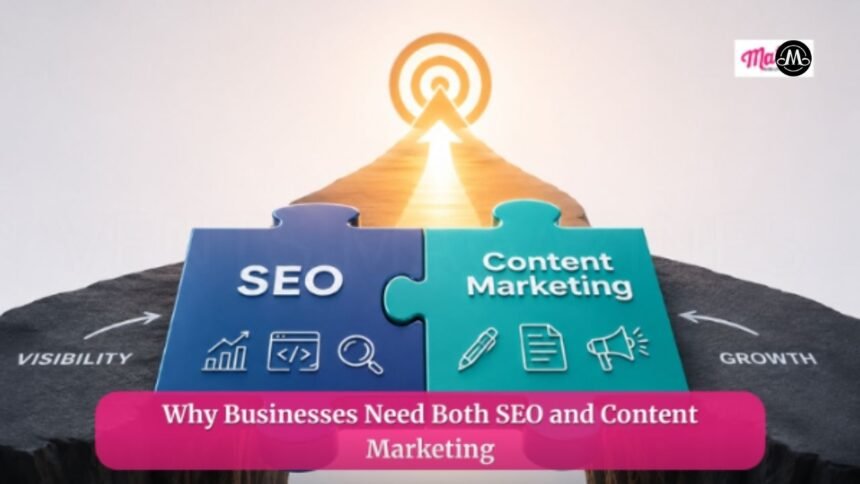
SEO and content marketing are tied together, and without one, the other falls short. Together, they form the baseline for organic traffic growth and long-term digital marketing success.
Unfortunately, plenty of businesses haven’t connected the dots yet. No stress, though. Visit www.mattersolutions.com.au to see how our SEO services cover both sides of the equation. We can guide you through a strategy that actually delivers.
Tensed about where your organic traffic is heading? Now is the right time to act. Read on to learn how SEO and content marketing work hand in hand.
What Is a Content Marketing Strategy, and Why Does It Go Beyond Blogging?
A content marketing strategy is a structured plan that decides what content to create, who it targets, and when it goes live. In simple terms, it covers your target audience, content goals, and publishing schedule. Without a strategy, content production becomes random and rarely supports your SEO goals.
What we’ve seen at Matter Solutions is that most businesses treat content as an afterthought. They publish sporadically, pick topics randomly, and wonder why organic search results don’t improve. A solid content strategy fixes that.
That’s where the following two disciplines start working together. Here’s how each one contributes.
How Content Creation Builds Trust With Search Engines
Search engines reward sites that publish consistent, high-quality content over time. Regular content creation shows Google your site is active, trustworthy, and worth ranking. It’s an ongoing process, rather than a one-time push.

Here’s why: Google search evaluates user engagement, topical depth, and how thoroughly your writing covers a subject. When your site has fresh content going up regularly, it stays relevant in search engines’ eyes.
Based on our firsthand experience, sites that publish well-structured content consistently tend to hold stronger positions. After all, creating high-quality content requires genuine depth and clear relevance to your audience.
Where Keyword Research Fits Into Your Content Plan
Ever published a blog post that got zero traffic? Chances are, keyword research wasn’t part of the process. Without it, you’re essentially guessing what your audience wants.
Keyword research identifies the exact search queries your audience types before you create a single word. It tells you which relevant keywords have countable search volume and which long-tail keywords target niche audiences with strong commercial intent.
Keyword stuffing, on the other hand, does the opposite. It tanks your rankings and frustrates readers. That’s why each piece of your content should focus on one set of targeted keywords, supported by related secondary terms.
How SEO and Content Marketing Work Together
SEO and content marketing work together because one builds the structure and the other fills it with material worth ranking. SEO handles the technical aspects: web pages, meta descriptions, internal linking, broken links, and structured data. Content marketing then fills your website with relevant, well-researched material that keeps readers engaged.

Believe it or not, even the best content won’t perform without a solid SEO strategy behind it. Search engines discover web pages through XML sitemaps, internal linking structures, and crawlable page architecture. Without those in place, your content stays buried in search results.
That said, when both work in sync, organic search visibility builds steadily. Your pages start appearing for the right search queries, pulling in more relevant traffic from Google search over time.
Organic Traffic Growth: What It Takes to Rank on Google Search
Organic traffic doesn’t arrive by accident. It takes consistent publishing, precise keyword targeting, and solid technical SEO to get there. These three areas are worth paying close attention to:
- Page Speed: Google Search prioritises pages that load fast, particularly on mobile devices. So, run regular checks via Google Search Console to catch slow pages early.
- Technical SEO: Search engines need clean architecture to crawl and index your web pages correctly. Mobile optimisation, fixing broken links, and an updated XML sitemap all feed into stronger search engine rankings.
- Key Metrics: Google Analytics and Google Search Console show which pages drive more organic traffic and where users drop off. Businesses that track key metrics weekly fix issues far more quickly.
Solid search engine optimisation across all three areas gives your content the foundation it needs. Without that groundwork, even well-written pages struggle to pull in more organic traffic consistently.
High-Quality Content and High-Quality Backlinks: The Smart Pairing
Publishing high-quality content is the most fruitful way to earn high-quality backlinks without chasing them manually. In fact, link building starts with what you put on the page.
Let’s break down how the two connect.
Why High-Quality Content Attracts High-Quality Backlinks Naturally
Other sites link to your content that is original, well-researched, and genuinely useful to their own readers. That’s the reality of how link building works in the SEO industry. You earn referring domains by giving other websites a solid reason to point their audience your way.
Through our hands-on experience, thin or generic content rarely earns high-quality backlinks regardless of how often it gets published. Search engine rankings respond to authority, and authority comes from content that other websites genuinely trust and reference.
Improving brand visibility through strong content also pulls in new referring domains over time. So naturally, the more authoritative your content, the stronger your search rankings become.
How Digital Marketing Ties Organic Search and Link Building Together
Now that you know how backlinks work, here’s where digital marketing extends that reach even further.
Sharing content across social media and social media marketing channels puts your pages in front of audiences who wouldn’t find them through organic search alone.
Wider distribution increases the chance that authoritative sites discover and link to your content. Let’s say paid advertising pushes your content to targeted audiences quickly. That’s particularly useful when organic search is still building momentum.
With that in mind, organic search and link building support each other far better when backed by a broader digital marketing plan. More relevant traffic flows in, referring domains grow, and your overall search visibility strengthens gradually. Simple equation.
Can Your Business Afford to Do Only One?
No. Relying on only SEO or only content marketing leaves serious gaps in your organic search strategy. Businesses using only SEO services without content struggle to rank for competitive, high-intent search results. There’s simply nothing helpful to show search engines.
On the flip side, businesses producing content without a long-term strategy behind it publish material that never reaches the right audience. Relevant traffic stays low, and the customer journey stalls before it even begins.
Honestly, combining both is the only path that delivers consistent, compounding results over time.
Ready to Build a Strategy That Truly Grows?
SEO and content marketing aren’t two separate tasks you tick off a list. They work as one unified long-term strategy, and businesses that treat them that way consistently pull ahead in organic search. Our SEO experts have seen this time and again across every industry we’ve worked in.
At Matter Solutions, our comprehensive SEO services cover everything from technical SEO to content creation, local SEO, and actionable strategies built around your goals. We don’t do cookie-cutter SEO packages. Every plan is built around what your business actually needs.